
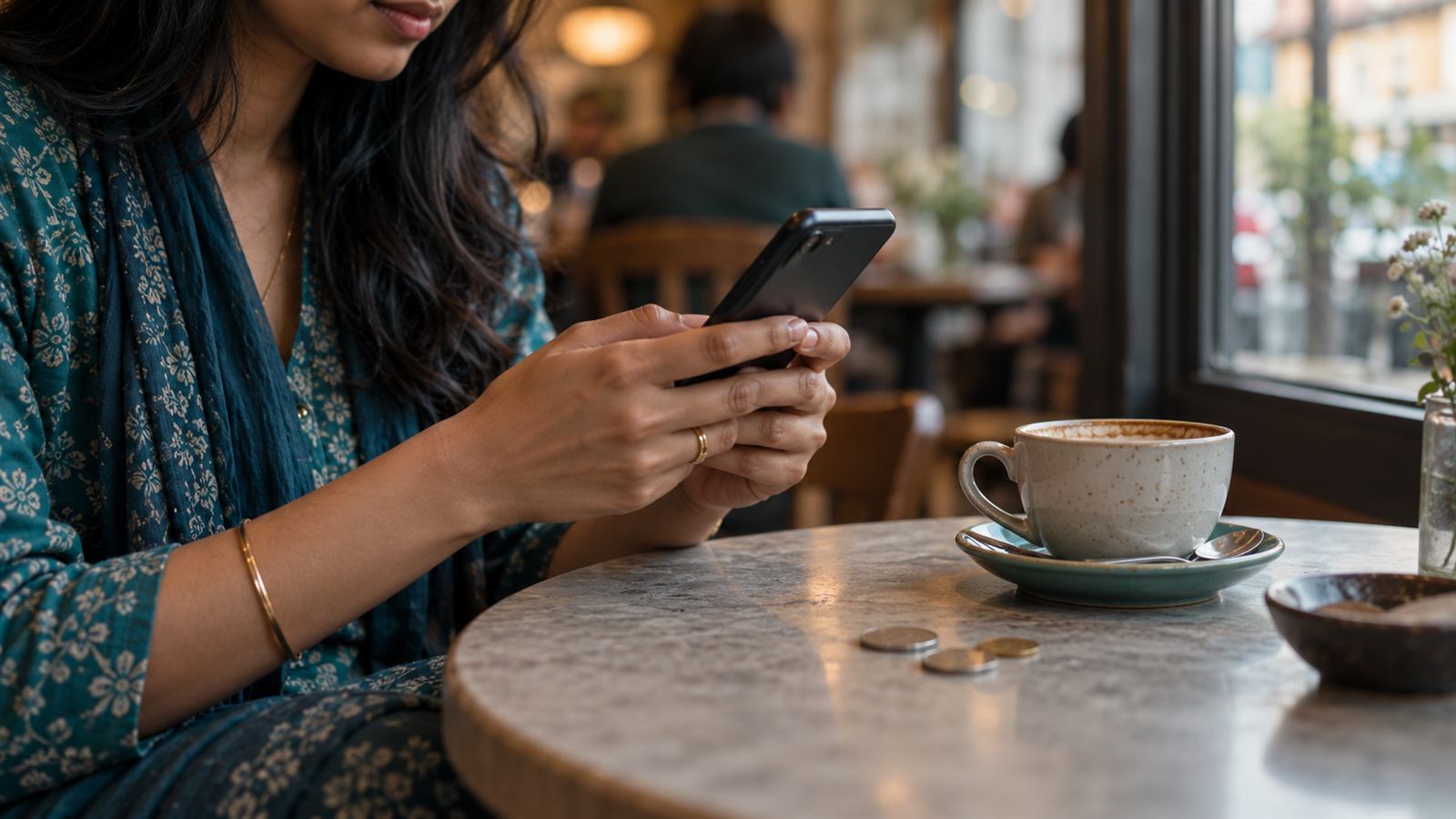
Payment fees on small transactions hit hardest because card processors such as Stripe usually charge a percentage plus a fixed amount, often 2.9% plus 30 cents. On a sale under $10, that fixed 30 cents can push the fee close to 9%, which is enough to eat a 10% commission.
The founder came to us with an idea for a paid live-video marketplace. Hosts go live, viewers pay for a short session, and the platform keeps a share of each one. The plan was to launch in one European market first and grow from there. He needed a pitch deck and a business model that would stand up to questions.
Sessions were cheap by design. A session costs about the same as a coffee and lasts a few minutes. That low price is the hook. It's also where the trouble started.
The take rate question
The founder's first instinct was a small commission, around 10%. He wanted hosts to feel well paid, and that's a fair goal. A marketplace with no hosts has nothing to sell.
We put that rate next to two others, 20% and 50%. At 50%, the platform makes good money on paper. That rate only works for apps that already have a huge audience and can promise hosts a crowd. A new platform with no users can't ask for half. Hosts would leave, or swap contact details with viewers and carry on somewhere else.
At 10%, the problem was the fees.
The card fee that hits small transactions hardest
Card processors usually charge a percentage plus a fixed amount on every sale. A common rate is 2.9% plus 30 cents. On a $100 sale, that's about 3%. On a sale under $10, the fixed 30 cents does the damage. For the smallest session, the fee came to close to 9% of the price.
Now put that next to a 10% commission. After the card fee, the platform kept a few cents per session. That can't pay for servers or marketing. It would only work at a scale that was years away.
The app stores were worse. Apple and Google take 30% on in-app purchases, or 15% for smaller developers. A 30% fee is bigger than a 20% commission. Every sale through the store would lose money. Even at 15%, only a thin slice was left.

How we fixed it
We recommended a 20% commission. It's the standard on many creator and freelance platforms, so hosts already know it. It also leaves room to cut the rate later as a selling point, and that's easier than raising it.
Then we moved the payments. Viewers pay on the web, outside the app stores, at least at first. That meant starting with a web app before building native apps.
Last, we added credits. Viewers buy a bundle up front and spend it one session at a time. The 30-cent fee is charged once on the bundle instead of on every session. That brought the card fee down from close to 9% to about 4%. Viewers also don't have to type in a card for every session, and people who've already bought credits tend to use them.
With those changes the numbers worked. So we pointed the founder at the one figure that would decide the business: how many viewers come back for a second session. We set a target of 30% within 30 days.
What we built
- A business model analysis that compares commission rates after card and app store fees
- A credit wallet design that cuts the card fee on each session
- A launch plan that signs up hosts before opening the doors to viewers
- A market research brief and an executive summary
- A 30-slide pitch deck and a 12-slide advisory deck
Why it matters for your raise
Founders with a low price often set their commission first and look at fees later. On a big ticket, that order is fine. On a small one, the fees can be bigger than the commission, and the model loses money on every sale without anyone noticing.
An investor will run this sum in their head in the first meeting. It's better if your model has already done it.
If you sell something for under $10, work out the payment fees before you set your cut. Then pick the payment route that keeps the most of each sale.
Questions founders ask
How much does Stripe charge on small transactions?
Stripe's standard online card rate in the US is 2.9% plus 30 cents, and rates differ by country and card type, so check the current pricing for your market. The fixed 30 cents is what hurts small sales. On a $100 sale the fee is about 3%. On a sale under $10 it can come close to 9%. Selling credits in bundles means the fixed fee is charged once per bundle.
What is a typical marketplace take rate?
It varies a lot. Many creator and freelance platforms take about 20%, so sellers already know that rate. Apps with a huge audience can ask for much more, sometimes half, because they can promise sellers a crowd. A new marketplace usually can't. Whatever rate you pick, check what's left after card and app store fees, because on small sales the fees can be bigger than your cut.
How do you avoid app store fees on in-app payments?
Apple and Google take 30% on in-app purchases, or 15% for smaller developers. The usual way round it is to take payment on the web, outside the app stores, for example by launching a web app before building native apps. Store rules on outside payments differ by country and change often, so check the current terms before you build your pricing around them.